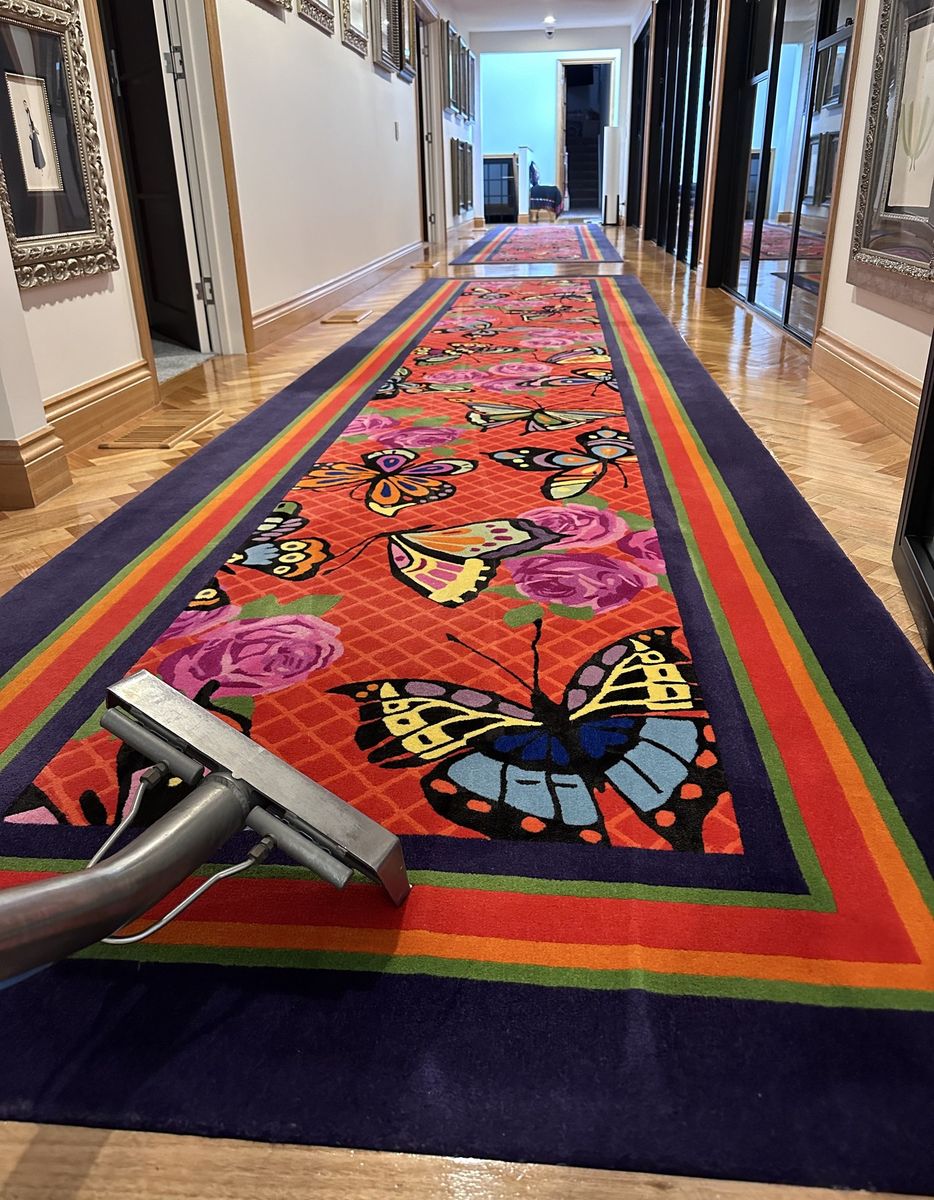
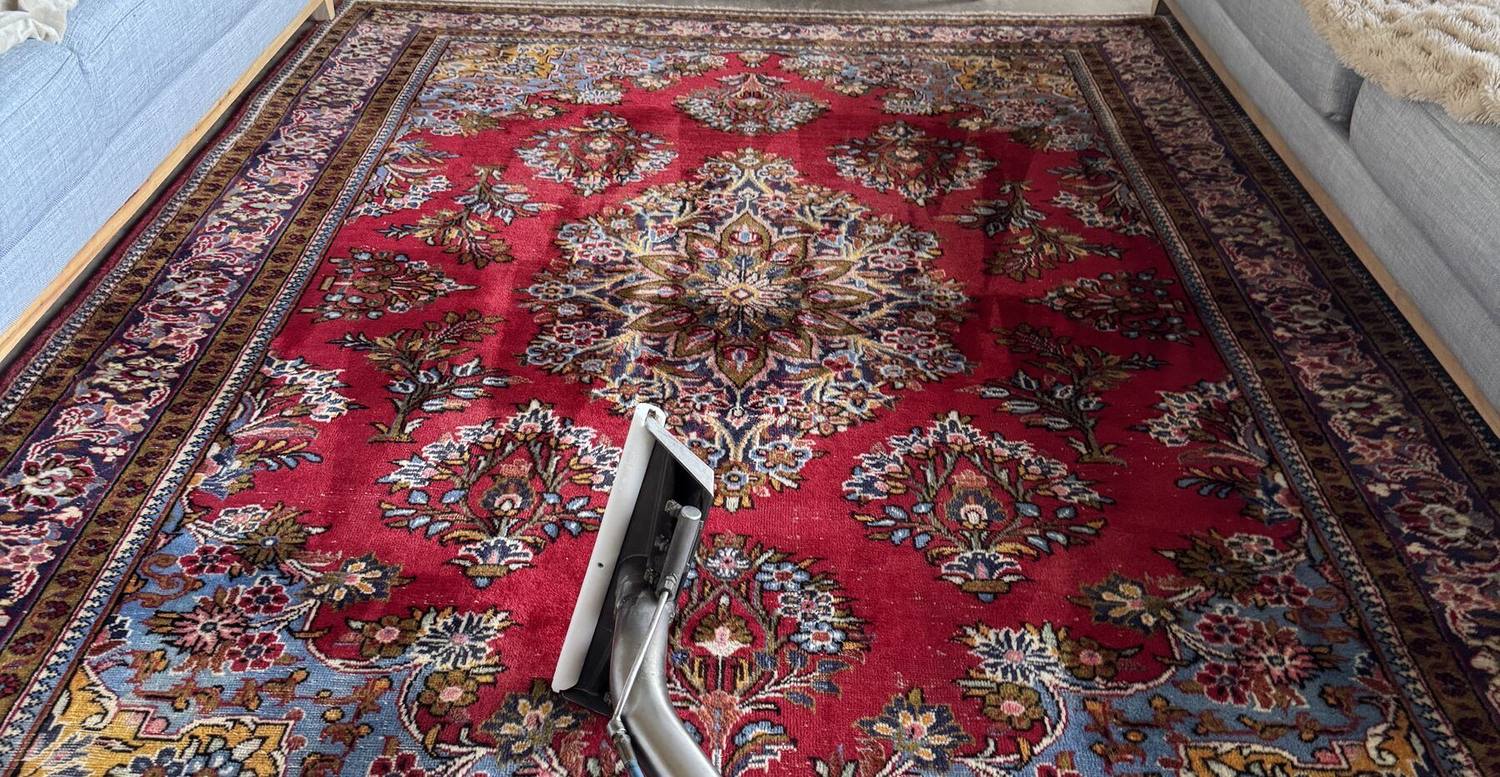
On-site rug cleaning across the Gold Coast. Every rug assessed and fibre tested before we touch it. Wool, synthetic, cotton and blends, with honest advice on the rugs we will not clean and why.
"Phil is not only a great guy, but he genuinely knows how to solve any problem you throw at him, and we've certainly had a few over the years."
Melanie B., Google review
★★★★★
"Phil is hands-down the best pest control guy we've ever had. He shows up right on time, always friendly and professional, and took the time to actually explain what he was doing and why."
Tanya G., Google review
★★★★★
"Had an amazing experience. They were very quick and efficient, I couldn't have asked for anything more. Phil and his team did an amazing job and couldn't recommend more."
Jorja W., Google review
★★★★★
"Gave me honest and genuine advice and service at a great price."
Google review
★★★★★
"Extremely high standard of work, communication and customer service."
Google review
★★★★★
"Phil and Cooper did a fantastic job cleaning our carpet, rugs and furniture."
Google review
Looking for rug cleaning on the Gold Coast? CPH Services Gold Coast cleans rugs on-site across the Gold Coast, in your home. We identify the fibre type, the construction and the soiling level before any product is applied, and we never take rugs off-site. If a rug cannot be cleaned safely, we say so before we start. Call 1300 85 48 28 or use the 60 Second Quick Estimate.
Why rugs are harder to clean than carpet
Rugs are not carpet. They look similar, they sit on the floor, and they get dirty in the same ways, but the fibres they are made from, the way they are constructed, and the way they respond to cleaning are fundamentally different. A rug that is cleaned incorrectly can come out permanently damaged. We have seen it happen, and we will not be the operator that causes it.
Wall to wall carpet is a relatively uniform product. Rugs come in hundreds of fibre types, construction methods, pile heights and backing materials, and they vary from a $40 synthetic mat to a hand knotted wool rug worth thousands of dollars. The cleaning approach that is correct for one is wrong for another.
There is also a structural reason why stain removal on rugs is more challenging. The way rugs are manufactured, whether woven, tufted, hand knotted or flatwoven, means liquid penetrates the pile differently and can wick back to the surface as the rug dries. A stain that appears to lift during cleaning can reappear hours later. This is not a cleaning failure. It is a characteristic of how rugs are made, and we explain it to every customer before we begin.
Fibre types: what can and cannot be cleaned
Fibres we clean
Wool: the most common premium rug fibre. Needs specific pH balanced products and careful temperature and moisture management. The right approach produces excellent results.
Synthetics (polypropylene, polyester, nylon, acrylic): the most resilient and forgiving rug fibres. Respond well to professional steam extraction.
Cotton: cleanable with appropriate products and moisture management. Prone to shrinkage if over-wetted.
Blends: assessed on the dominant fibre and the proportion of any moisture sensitive content before any product is applied.
Fibres we do not clean
Silk and bamboo silk: highly sensitive to moisture, pH imbalance and agitation. Incorrect cleaning causes permanent colour bleed, distortion and watermarks. Needs a specialist silk facility, not a steam cleaning operator.
Viscose and rayon (sold as "art silk"): we do not wet clean these. Water causes permanent watermarks, browning and pile distortion. If your rug has a shiny silk-like finish at a non-silk price, it is probably viscose. We check before we touch it.
Jute, seagrass and sisal: plant fibres that shrink, distort, brown and can rot when wet cleaned. Dry methods only.
Why we will not clean a rug that should not be cleaned
We are occasionally told that a rug has been professionally cleaned before. We take that on board, but it does not change our assessment. A previous clean without visible damage does not mean it was done correctly, and rug damage is not always immediate; fibre degradation from the wrong product or over-wetting can appear gradually as the rug dries. Our assessment is based on what we find in front of us: the fibre type, the construction, the condition of the backing, and the concerns you have raised. If our professional assessment is that a rug should not be wet cleaned, we will not clean it, and we will explain why. That conversation is better before we start than after damage we cannot undo.
Pet odour in rugs
Pet odour is one of the most common reasons customers call us for a rug clean. When a pet urinates on a rug, the liquid penetrates through the pile, into the backing, and often into the floor covering underneath. The source of the odour is the uric acid crystals deposited as the urine dries. These crystals are reactivated by moisture and warm air, which is why a rug that smells tolerable in winter becomes much more noticeable in a Gold Coast summer.
We treat pet odour using an antimicrobial enzyme treatment that breaks down the uric acid and organic matter at a molecular level, applied with appropriate dwell time, worked through the pile and extracted as part of the clean. The outcome depends on how long the urine has been present, how deeply it has penetrated the backing, and the fibre type. We tell you what we expect to achieve before we apply any product. If permanent odour is likely to remain, we say so honestly before you spend money with us.
Staining and honest expectations
Rug stain removal carries a higher level of uncertainty than carpet stain removal, and we are direct about this with every customer. The following can permanently set a stain into rug fibre, sometimes within hours: wine and coffee (tannins and acidity bond with dye in natural fibres), pet urine (uric acid sets quickly in wool, and heat or delay makes it worse), high acid or high fat food spills, and any previous treatment with a hot iron, steam or the wrong product. We inspect every stain during the pre-clean assessment and give you an honest picture of what we expect to achieve.
How we clean rugs
Inspection and fibre assessment: fibre type, moisture sensitivity, backing condition, all staining and soiling, and the expected outcome discussed with you before we begin
Pre-treatment: products appropriate to the fibre type; enzyme treatment applied with dwell time for pet odour and urine
Extraction: where the fibre and construction permit, professional steam extraction through the pile with moisture levels carefully managed
Post-clean treatment: enzyme and antibacterial product where relevant, continuing to work after we leave
Post-clean assessment: we walk through the result with you before we leave
We clean rugs in place, in your home. We do not take rugs off-site under any circumstances.
Rug cleaning pricing Gold Coast
Rug cleaning is priced on enquiry. Unlike carpet cleaning, where room count provides a reasonable starting point, rug cleaning costs depend on the fibre type, the size of the rug, the soiling level, any pet accidents or staining, and whether odour treatment is required. Call 1300 85 48 28 or submit an enquiry online and we will ask the questions we need to provide an accurate estimate. We do not add charges after the job without telling you first.
Written by Phil, CPH Services Gold Coast. Carpet, upholstery and rug cleaning technician and licensed pest control technician, working Gold Coast properties since 2011. IICRC accredited. Three Best Rated Best Business, 2016 to 2026.
Got questions? Straight answers below. Or skip ahead:
No. We clean rugs on-site, in your home, on every job. We do not take rugs off-site under any circumstances.
Can all rugs be steam cleaned?
No. Silk, bamboo silk, viscose, rayon, jute, seagrass and sisal rugs cannot be safely wet cleaned. Applying moisture to these fibres causes permanent damage including watermarks, shrinkage, fibre browning and pile distortion. We identify the fibre type at inspection and will not proceed with a wet clean on a rug that should not receive one.
My rug has been professionally cleaned before. Can you clean it again?
We will assess it on its merits. Previous cleaning does not guarantee that the method used was correct, and it does not mean the same approach will produce the same outcome. We base our assessment on what we find at inspection: the fibre type, the condition of the backing, and the specific concerns you have raised. If we believe it is not safe to clean, we will say so.
Can you remove pet urine smell from a rug?
In most cases, yes. We treat pet odour using an antimicrobial enzyme product that breaks down the uric acid causing the smell at a molecular level. Results depend on how long the urine has been present and how deeply it has penetrated the backing. We assess this at inspection and tell you what outcome to expect before we begin.
Can you remove wine or coffee stains from a rug?
Possibly, depending on how long the stain has been present and the fibre type. Wine and coffee contain tannins and acids that can set into natural fibres quickly. A stain treated promptly has a much better chance of being lifted than one that has been there for days or weeks. We assess every stain during the inspection and give you an honest expectation of the result before we apply any product.
Why might a stain come back after cleaning?
This is called wicking. As a rug dries after cleaning, moisture draws residue from the backing and lower pile back up to the surface. It is a characteristic of how rugs are constructed and is more common in high pile and thick construction rugs. We warn every customer about this possibility before we clean. If a stain wicks back after we have been, contact us and we will advise on whether a follow-up treatment is likely to help.
Do you clean wool rugs?
Yes. Wool is one of the most common premium rug fibres and we clean it regularly. Wool requires specific pH balanced products and careful moisture management to avoid shrinkage and distortion. The right approach on wool produces excellent results.
Do you clean synthetic rugs?
Yes. Synthetic rugs made from polypropylene, polyester, nylon and acrylic are generally the most resilient rug type and respond well to professional steam extraction. These are among the most straightforward rug cleans we carry out.
Why won't you clean silk or viscose rugs?
Because the risk of permanent damage is too high to proceed responsibly. Silk and viscose are highly sensitive to moisture, pH imbalance and agitation. Incorrect cleaning causes irreversible colour bleed, fibre distortion, watermarks and texture change. Silk rugs require a specialist silk cleaning facility. Viscose rugs should be maintained through dry methods only. We will explain this clearly at inspection.
How long does a rug take to dry after cleaning?
Drying times vary depending on the fibre type, pile height, construction and ventilation. Most rugs dry within four to eight hours with good airflow. We manage moisture levels carefully during the clean to avoid over-wetting, which both protects the rug and reduces drying time. Rolling the rug up before it is fully dry is not recommended.
Do you service my area?
We clean rugs across the Gold Coast from Tweed Heads north through to Coomera and surrounding areas. Call 1300 85 48 28 to confirm.
Ready for an honest estimate?
Tell us about the job in 60 seconds. Personal reply, usually the same day. No pressure, no lock-in, no call centre.